

Chair Dry Cleaning Service in Sector 1 Vashundhra
Chairs are used every day in homes, offices, restaurants, cafés, hotels, and commercial spaces. Over time, they collect dust, stains, food particles, bacteria, sweat, allergens, and unpleasant odors that affect both hygiene and appearance. At Azima Queen, we provide a professional Chair Dry Cleaning Service in Sector 1 Vashundhra using advanced upholstery cleaning equipment, eco-friendly chemicals, and experienced cleaning professionals.
Our low-moisture chair dry cleaning process removes deep-seated dirt, stains, germs, and odors while protecting the fabric and upholstery. Whether you have fabric chairs, office chairs, dining chairs, executive chairs, visitor chairs, or banquet chairs, we customize the cleaning process according to the chair material and condition.
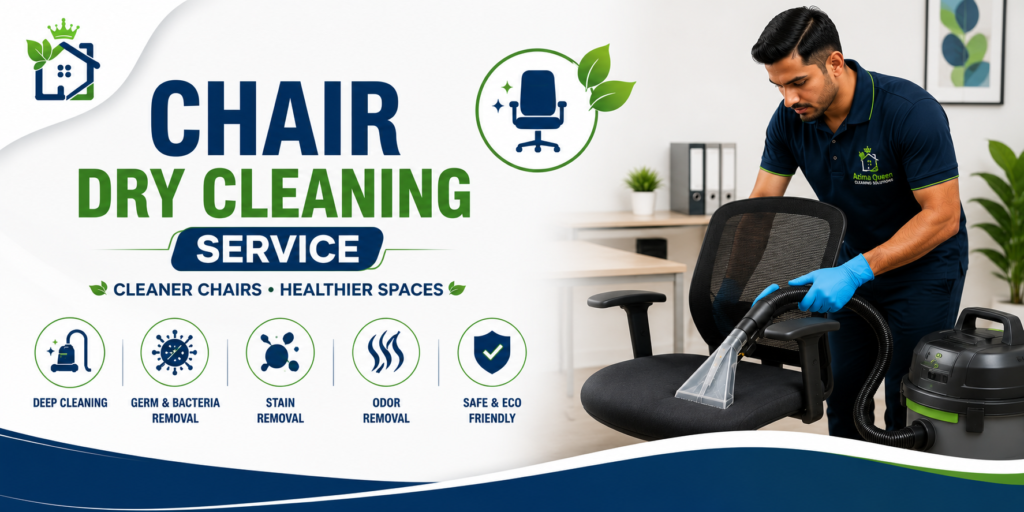
Chair Dry Cleaning Service by Azima Queen – Fabric chair cleaning, office chair cleaning, stain removal, sanitization, odor removal, and professional upholstery care.
Chair Dry Cleaning Service in Sector 1 Vashundhra by Azima Queen – Deep dust removal, stain treatment, fabric sanitization, odor removal, and complete upholstery care using professional dry cleaning equipment.
Read Our Customer Reviews & Service Feedback
Choose Your Chair Dry Cleaning Service
- Office Chair Dry Cleaning
- Fabric Chair Dry Cleaning
- Dining Chair Dry Cleaning
- Executive Chair Cleaning
- Visitor Chair Cleaning
- Banquet Chair Cleaning
- Restaurant Chair Cleaning
- Hotel Chair Cleaning
- Café Chair Cleaning
What’s Included in Our Chair Dry Cleaning Service?
Our comprehensive chair dry cleaning package ensures every part of the chair is thoroughly cleaned and sanitized.
Chair Inspection
- Fabric inspection
- Stain identification
- Dust assessment
- Upholstery condition check
Dry Vacuuming
- Dust extraction
- Hair removal
- Crumb removal
- Deep vacuum cleaning
Stain Treatment
- Food stain removal
- Tea & coffee stain removal
- Ink stain treatment
- Oil & grease stain removal
- Spot cleaning
Upholstery Dry Cleaning
- Eco-friendly fabric shampoo
- Low-moisture cleaning
- Fabric-safe treatment
- Deep upholstery cleaning
Machine Cleaning
- Upholstery machine cleaning
- Cushion cleaning
- Armrest cleaning
- Backrest cleaning
Sanitization
- Germ removal
- Bacteria elimination
- Allergen reduction
- Fabric sanitization
Odor Removal
- Odor neutralization
- Fresh fragrance treatment
Final Grooming
- Fabric brushing
- Quality inspection
- Ready-to-use finishing
Optional Add-on Services
- Cushion Dry Cleaning
- Office Workstation Cleaning
- Sofa Dry Cleaning
- Carpet Dry Cleaning
- Fabric Protection Treatment
- Upholstery Sanitization
What Products & Equipment Do We Use?
- Eco-Friendly Upholstery Cleaning Chemicals
- Industrial Vacuum Cleaner
- Upholstery Dry Cleaning Machine
- Upholstery Extraction Machine
- Soft Fabric Brushes
- Professional Fabric Shampoo
- Steam Sanitization Equipment (where suitable)
- Microfiber Cloths
- Professional Deodorizer
Chair Dry Cleaning Process
Step 1 – Chair Inspection
Our experts inspect the chair fabric, upholstery, stains, and overall condition before choosing the appropriate cleaning method.
Step 2 – Dry Vacuuming
Industrial vacuum cleaners remove dust, crumbs, pet hair, allergens, and loose dirt from the chair surface and upholstery.
Step 3 – Stain Pre-Treatment
Specialized stain removers are applied to stubborn stains caused by food, beverages, ink, oil, and daily use.
Step 4 – Upholstery Dry Cleaning
Professional dry cleaning machines and eco-friendly fabric shampoo clean the upholstery without soaking the fabric.
Step 5 – Deep Machine Cleaning
Advanced upholstery machines remove embedded dirt, bacteria, and allergens from deep inside the chair fabric.
Step 6 – Sanitization
Professional sanitizers eliminate germs, bacteria, viruses, and odor-causing microorganisms.
Step 7 – Deodorizing
A fabric-safe deodorizer removes unpleasant odors and leaves the chair fresh and clean.
Step 8 – Final Inspection
Every chair is carefully inspected to ensure complete cleaning, proper finishing, and customer satisfaction.
Benefits of Chair Dry Cleaning
Removes Dust & Dirt
Removes accumulated dust, dirt, crumbs, and allergens from upholstery.
Removes Stubborn Stains
Professional stain treatment helps remove food, tea, coffee, ink, and oil stains.
Eliminates Germs & Bacteria
Sanitization reduces harmful bacteria, germs, and allergens.
Removes Unpleasant Odors
Neutralizes bad smells caused by sweat, spills, and daily use.
Extends Chair Life
Regular professional cleaning protects upholstery and increases furniture lifespan.
Quick Drying
Low-moisture cleaning allows chairs to dry quickly and be used sooner.
Improves Workplace & Home Hygiene
Creates a cleaner, healthier, and more comfortable seating environment.
Why Choose Azima Queen?
Experienced Professionals
Skilled technicians trained in upholstery and chair cleaning.
Advanced Equipment
Industrial-grade upholstery cleaning machines for superior results.
Eco-Friendly Chemicals
Safe cleaning products for homes, offices, restaurants, and commercial spaces.
Affordable Pricing
Competitive pricing with complete transparency.
Flexible Scheduling
Convenient appointments to suit your schedule.
Customized Cleaning Solutions
Cleaning methods tailored to each chair’s fabric and condition.
Customer Satisfaction
Trusted by homeowners, offices, hotels, restaurants, schools, and businesses throughout Sector 1 Vashundhra.
Restore the Freshness of Your Chairs
Dirty and stained chairs can make your home or workplace look untidy and can accumulate dust, food particles, body oils, and unpleasant odors over time. Azima Queen Cleaning Solutions provides professional Chair Cleaning Services to deep clean and refresh your upholstered and fabric chairs.
Our trained cleaning professionals use specialized equipment and suitable cleaning products to treat dirt, stains, dust, and odors while taking care of the chair’s fabric and upholstery.
What We Clean
We provide chair cleaning for:
- Office Chairs
- Dining Chairs
- Fabric Chairs
- Upholstered Chairs
- Executive Chairs
- Visitor Chairs
- Restaurant Chairs
- Hotel Chairs
- Conference Chairs
- Reception Chairs
Book Your Chair Dry Cleaning Today
Clean chairs improve comfort, hygiene, and the overall appearance of your home or workplace. Whether you need one-time chair dry cleaning, regular office chair maintenance, restaurant chair cleaning, or hotel furniture cleaning, Azima Queen is ready to help.
Our trained professionals use advanced upholstery cleaning equipment and eco-friendly products to remove dust, stains, bacteria, allergens, and odors while protecting your chair fabric.
Book Now
Book your Chair Dry Cleaning Service in Sector 1 Vashundhra today with Azima Queen and enjoy fresh, clean, and hygienic chairs.
Frequently Asked Questions
1. What is included in chair dry cleaning?
Our service includes inspection, vacuuming, stain treatment, upholstery dry cleaning, deep machine cleaning, sanitization, deodorizing, and final inspection.
2. Which types of chairs do you clean?
We clean office chairs, fabric chairs, dining chairs, executive chairs, banquet chairs, visitor chairs, restaurant chairs, hotel chairs, and upholstered seating.
3. Are the cleaning chemicals safe?
Yes. We use eco-friendly, upholstery-safe, and professional-grade cleaning products that are safe for homes, offices, children, and pets.
4. How long does chair dry cleaning take?
Most chair cleaning services take 20–45 minutes per chair, depending on the size, fabric, and condition.
5. Can you remove old stains from fabric chairs?
Yes. Our professional stain removal process effectively treats many common stains such as food, tea, coffee, oil, and ink. Results may vary depending on the fabric type and age of the stain.
Search On Google
- Best Chair Dry Cleaning Service in Sector 1 Vashundhra
- Office Chair Cleaning
- Fabric Chair Cleaning
- Dining Chair Cleaning
- Upholstery Chair Cleaning
- Chair Cleaning Near Me
- Restaurant Chair Cleaning
- Hotel Chair Cleaning
- Chair Sanitization Service
- Chair Stain Removal
- Office Furniture Cleaning
- Professional Chair Cleaning
Conclusion
Professional Chair Dry Cleaning Service in Sector 1 Vashundhra helps maintain clean, hygienic, and fresh seating by removing dust, stains, bacteria, allergens, and unpleasant odors. Regular chair cleaning not only improves appearance but also extends the life of your upholstery and creates a healthier environment for your family, employees, or customers.
At Azima Queen, we use trained professionals, advanced upholstery clean